
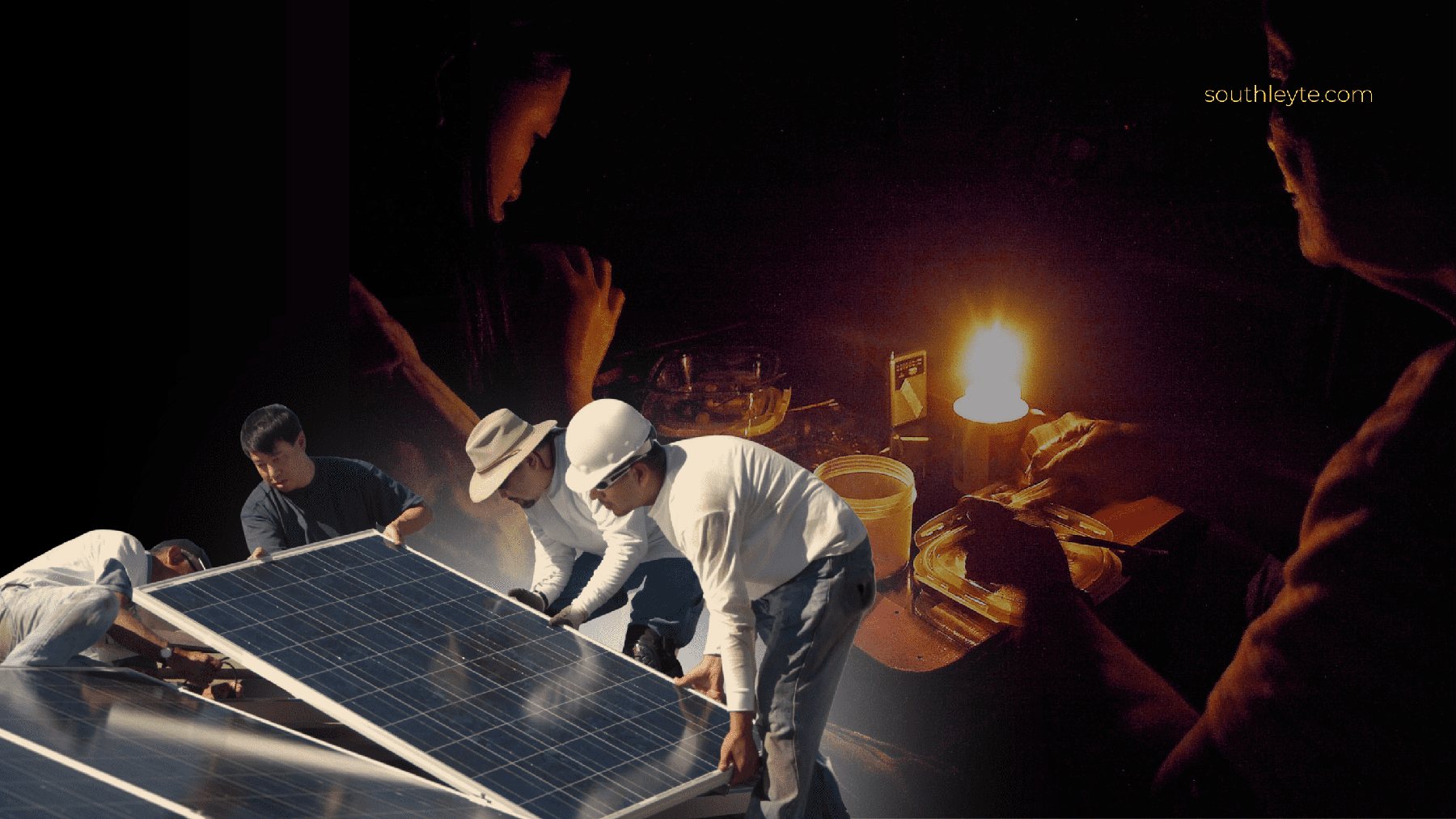
For many households in Southern Leyte, brownouts have become a part of daily life. From sudden outages that last a few hours to scheduled maintenance cuts that stretch through the day, residents are left adjusting their routines, businesses, and even education around an unreliable power supply.
But it’s not just the blackouts. Low voltage and constant fluctuations are also common, with abrupt on-and-off power surges that often damage appliances — adding unexpected expenses for already struggling families.
The Daily Struggle of Unreliable Power
Students complain about interrupted online classes. Small business owners who rely on refrigeration or machinery face extra costs running generators. Families often spend their evenings in the dark or relying on rechargeable lamps.
Meanwhile, the constant fluctuations make it risky to use sensitive electronics. Many locals now rely on voltage regulators or surge protectors — extra expenses on top of already high electricity bills.
The problem isn’t new — but many agree it’s getting harder to ignore.
SOLECO’s Role and Ongoing Upgrades
The Southern Leyte Electric Cooperative (SOLECO) has said it is working on system upgrades to improve reliability. Maintenance works, line rehabilitation, and talks of renewable energy projects have been on the table.
But change takes time, and residents are left wondering: how long do they have to wait?
Net Metering: A Missed Opportunity?
One potential solution is net metering, which allows households with solar panels to sell excess power back to the grid. In theory, it’s a great way to encourage renewable energy and reduce the load on SOLECO.
In practice, however, the system is complicated and costly. Applications can be difficult, and the pricing is discouraging. SOLECO buys excess electricity at just ₱5–7 per kWh, but sells it back to consumers at ₱12–15 per kWh. For most families, it’s simply not cost-effective, turning what could be a win-win into a bottleneck.
This is frustrating, especially since a growing number of households in Southern Leyte already use hybrid solar setups. If supported properly, these homes could contribute meaningfully to the national grid.
How Locals Are Coping
In the meantime, residents continue to find their own ways to adapt. Some invest in solar-powered lamps and small backup systems. Others rely on community sharing — charging gadgets in areas where generators are running, or timing chores around electricity schedules.
Many also turn to protective devices like surge protectors or stabilizers to keep their appliances safe from low voltage and sudden surges. But for most, these are only temporary fixes to a deeper, systemic issue.
It’s a patchwork of small solutions, but it highlights the creativity and resilience of Southern Leyteños.
Can Southern Leyte Find a Lasting Solution?
SOLECO’s planned upgrades and the push for renewable energy are steps in the right direction. But without practical changes — especially in making net metering accessible and fair — the region risks missing out on a chance to tap into household-level energy solutions.
It may be high time to revisit the system, so that renewable energy from homes and communities isn’t just possible — but practical.
Until then, locals will continue adjusting in their own ways, finding solutions to keep the lights on, protect their appliances, and push through even when the bigger system falls short.
Back to all stories

Comments
Loading comments…